
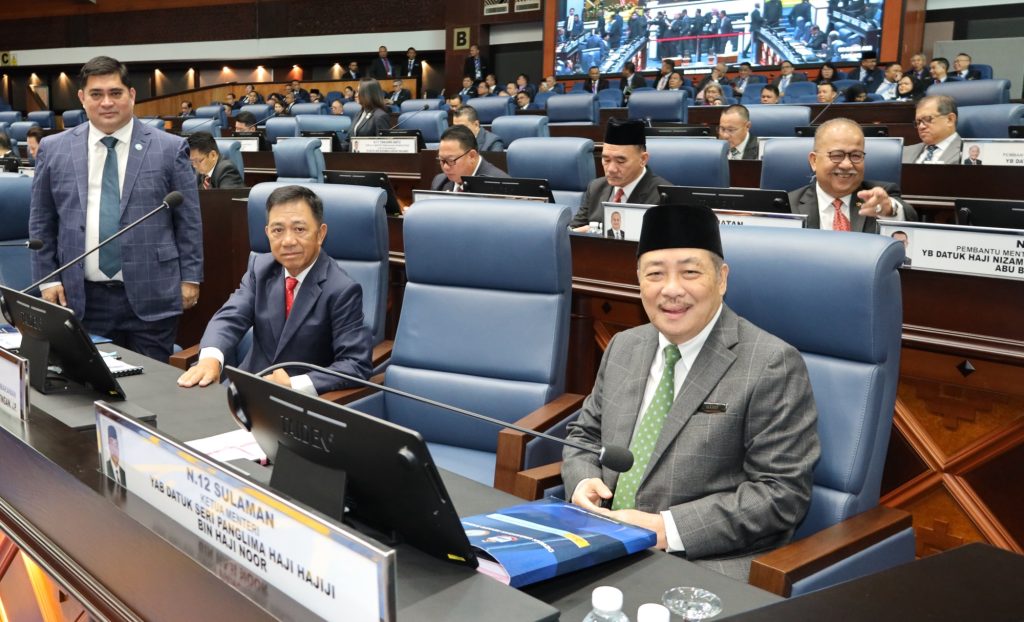
Sabah Chief Minister Datuk Seri Hajiji Noor defended the continued involvement of Kerjaya Kagum Hitech JV Sdn Bhd in the long-delayed Ulu Padas hydroelectric dam project, insisting the state could not simply cancel or penalise the company despite public scrutiny over its performance.
Hajiji said the company’s position in the project was part of a business arrangement and equity restructuring that was beyond the direct control of the state government.
“This is a business matter. “We cannot interfere. Kerjaya Kagum originally held 60% but later transferred 45% to Gamuda Berhad, retaining only 15%. We must also consider the legal aspects before taking any action,” he said when responding to a supplementary question from Lamag Assemblyman Datuk Seri Bung Moktar Radin from Umno in Kota Kinabalu on Monday.
Bung had questioned why Kerjaya Kagum remained in the project despite failing to deliver progress for nearly a decade, suggesting it was a failure that should have led to their removal and for Sabah Energy Corporation to take full control.
“Ten years and they’re still here — why are we protecting a company that has clearly failed? Shouldn’t they be removed? Why are we still giving them a seat at the table?”
The Chief Minister acknowledged frustrations with the delays but said the project’s history involved multiple layers — including initial federal-level approval in 2015, complex technical and legal requirements, as well as disruptions due to the COVID-19 pandemic.
“This wasn’t deliberate. There were many factors at play. The project is going ahead, and any issues raised will be looked into in the interest of the people,” Hajiji told the assembly.
The Ulu Padas Dam is slated for completion by 2030 and is expected to supply electricity and up to 6,000 million litres of water per day. However, critics have questioned the scale of the claim and raised concerns about whether the project is realistically progressing fast enough to meet Sabah’s current shortages.
Senallang assemblyman Datuk Seri Mohd Shafie Apdal echoed those concerns, demanding to know what short-term measures were being taken to alleviate electricity and water shortages affecting ordinary Sabahans and investors alike.
Hajiji responded that mini hydro and solar initiatives were in the pipeline and that Sabah Electricity Sdn Bhd was set to introduce battery-powered solutions starting mid-2025.
Despite the assurances, questions remain about Kerjaya Kagum’s role in the project — especially as it now holds only a minority stake — and whether the state has done enough to ensure accountability and delivery. – April 14, 2025
