
It was meant to be a partnership. A winning coalition. A force strong enough to oust Warisan from power in the 2020 Sabah election.
But today, Datuk Seri Bung Moktar Radin and Datuk Seri Hajiji Noor can barely be in the same room.
Back in September 2020, Sabah UMNO and Gabungan Rakyat Sabah (GRS) worked together to clinch victory, toppling the Warisan-led government. Hajiji, then a senior BERSATU leader, was sworn in as Chief Minister. Bung Moktar, Sabah UMNO chief, had expected a fair deal in return.
He didn’t get it.
Almost immediately, Bung grew frustrated over the division of power. UMNO had won 14 seats, yet he felt the party was sidelined in key decisions. Meanwhile, Hajiji, firmly aligned with then-Prime Minister Tan Sri Muhyiddin Yassin, tightened his grip over Sabah’s administration.
Then, the ground shifted. Muhyiddin lost power in August 2021, replaced by UMNO’s Datuk Seri Ismail Sabri Yaakob. Hajiji found himself in a precarious position. If he wanted to stay in control, he needed to move fast.
In December 2022, Hajiji made his play—he and his allies quit BERSATU, rebranding GRS as a fully Sabah-based coalition. It was a clean break from Muhyiddin’s now-opposition bloc. But for Bung Moktar, it was the final insult.
Days into 2023, UMNO struck back. On January 6, Bung announced that Sabah UMNO was pulling its support from Hajiji’s leadership. The goal? Force him out. But Hajiji was already a step ahead.
By January 11, the Chief Minister secured the backing of 44 out of 79 assemblymen, including defectors from BN and new allies in Pakatan Harapan (PH). He then reshuffled his cabinet, axing Bung Moktar as Deputy Chief Minister and installing PH leaders in key positions.
And just like that, Sabah UMNO was out.
At the national level, UMNO President Datuk Seri Ahmad Zahid Hamidi wasn’t happy either. He accused Hajiji’s former party, BERSATU, of systematically trying to weaken UMNO from within. But even Zahid, a seasoned political player, struggled to rein in the chaos.
Behind the scenes, he tried to broker peace. In early 2023, he formed a special committee to ease tensions, appointing Sabah’s Science, Technology, and Innovation Minister Datuk Yakub Khan to lead the effort. But the plan fizzled out. Yakub disappeared from the political radar, and the committee’s work—if it ever truly began—went silent.
Meanwhile, not everyone in Sabah UMNO was ready to burn bridges. Datuk Seri Abdul Rahman Dahlan, the party’s deputy chief, openly advocated for a truce. In September 2024, he made a case for working with GRS, arguing that a BN-GRS-PH alliance was the best way forward.
His party wasn’t convinced. Leaders quickly distanced themselves from his remarks, making it clear that Sabah UMNO’s official stance was to oppose Hajiji.
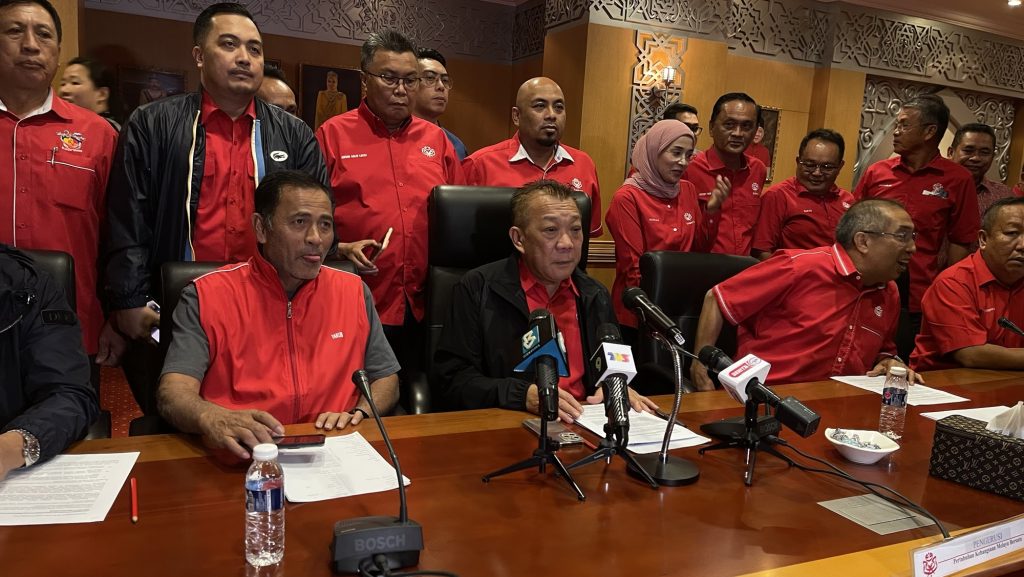
And now, in 2025, the feud is cemented. A majority of Sabah UMNO divisions have rejected any electoral pact with GRS. Hajiji continues to consolidate his power, while Bung Moktar remains steadfast in his opposition.
The rejection also reflects that the feud between the two leaders is both deeply personal and rooted in the party.
What began as an alliance to seize power has turned into a battle for survival. And with a state election looming, neither side is backing down at present. – February 10, 2025
