
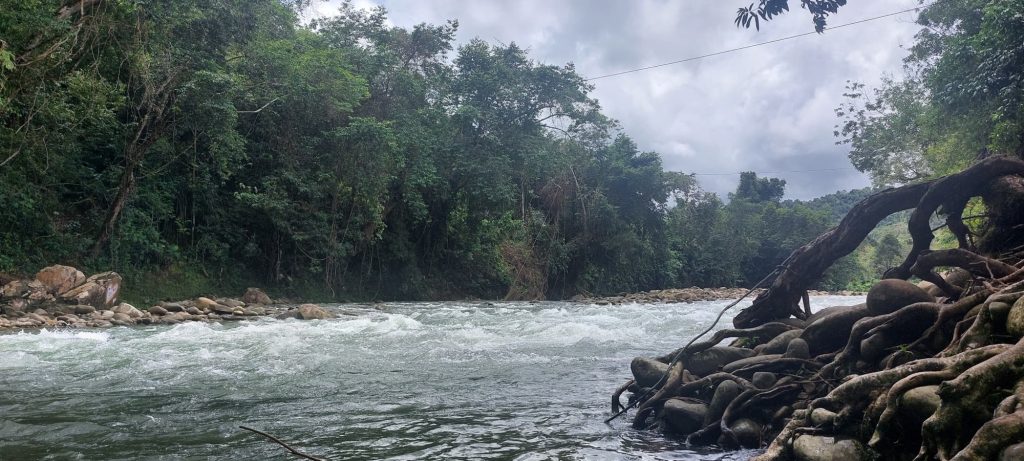
Rivers in Sabah should be free for all to enjoy. But now, access to some of the region’s most scenic rivers comes at a price. Want to take a dip? That’s RM5 to enter, RM5 more to swim (life jacket rental required), and RM20 if you want to sit on a bench.
Thinking of camping overnight? Add RM45. For a few hours by the river, you could easily pay RM30.
This isn’t just about a relaxing nature getaway. It’s community-based tourism, where locals run the show—and charge for the privilege. But as more villages tap into tourism for income, the question stands: At what point does community tourism become a business, not a community service?
Who owns Sabah’s rivers?
Private land often borders these rivers, but the rivers themselves? That’s where things get blurry. In Sabah, the Tagal system lets communities manage certain rivers, mostly for fish conservation.
The deal: locals protect the river, and in exchange, they control access. It’s a system that’s worked for years, overseen by the Sabah Fisheries Department, with about 400 Tagal co-management projects under its watch.
But while the original intent of Tagal was to conserve, some communities have turned it into a full-fledged business model—charging for everything from conservation to entry itself. The land may be private, but the river? It’s a public resource, and the lines between preservation and profit are getting blurred. So, what’s the real cost?
Tourism: The new economic lifeline?
Sabah’s unemployment rate is one of the highest in Malaysia. Agriculture no longer offers the same returns, and many villagers are turning to tourism as a solution. After all, eco-tourism doesn’t require planting or harvesting—just preserving what’s already there.
But here’s the catch: many of these operators aren’t trained in hospitality. Instead of warm welcomes, you get a list of rules and fees to follow. It’s not unusual for visitors to show up expecting a peaceful retreat, only to be met with restrictions, unexpected charges, and a general feeling of being overcharged. This isn’t the nature experience people signed up for.
The price tag debate
It’s true—keeping these places clean and safe requires effort. Locals do the heavy lifting: clearing rubbish, maintaining trails, ensuring visitor safety. Without their work, these rivers would quickly become polluted and overrun.
The UN’s World Tourism Organization (UNWTO) encourages tourism that benefits communities while minimizing harm. If the money collected from visitors goes back into conservation efforts, a small fee is understandable. But the transparency isn’t there. Too few sites disclose where the money goes. Is it for conservation, or is it just padding a few pockets?
Similar debates have unfolded worldwide. In Brisbane, Australia, private enterprises started charging high fees for public jetties, facing widespread criticism. Here, the question remains the same—how much should people pay to access natural spaces?
What needs to change?
Community tourism can boost local economies—but it has to be done right. If locals are going to charge for access, there needs to be clear pricing, and the money has to be accountable.
An industry expert tied to a public tourism agency in Sabah noted that community-based tourism (CoBT) operators are being trained to meet ASEAN tourism standards by 2030.
He added that CoBT is also key to addressing the United Nations’ Sustainable Development Goals (SDGs), touching on issues like poverty, hunger, education, and sustainable communities.
“Tourism should be about enhancing the well-being of communities,” he stressed, underscoring the need for proper regulation.
Buffer zones for Sabah’s rivers
Beyond the fees, Sabah’s rivers are also protected by state law. Under the Sabah Water Resources Enactment (SWRE) of 1998, the state mandates buffer zones along rivers to protect water quality and prevent erosion. For rivers over 3 meters wide, the buffer is 20 meters from the top of the bank.
This isn’t just for conservation. It’s also about regulating access. In areas where the land is private, these buffer zones help control who gets in and how much access they get. The Tagal system lets communities manage these areas, but it’s crucial that they follow state regulations to avoid turning these natural resources into cash cows.
Operators also need real training. Hospitality isn’t just about charging fees—it’s about delivering a positive experience for visitors. If guests feel welcome and see tangible benefits from the fees, they’ll be more likely to return.
In the end, rivers shouldn’t come with a price tag. But access? That could be reasonable—if it’s transparent, fair, and genuinely benefits the whole community, not just a select few. – March 11, 2025
