
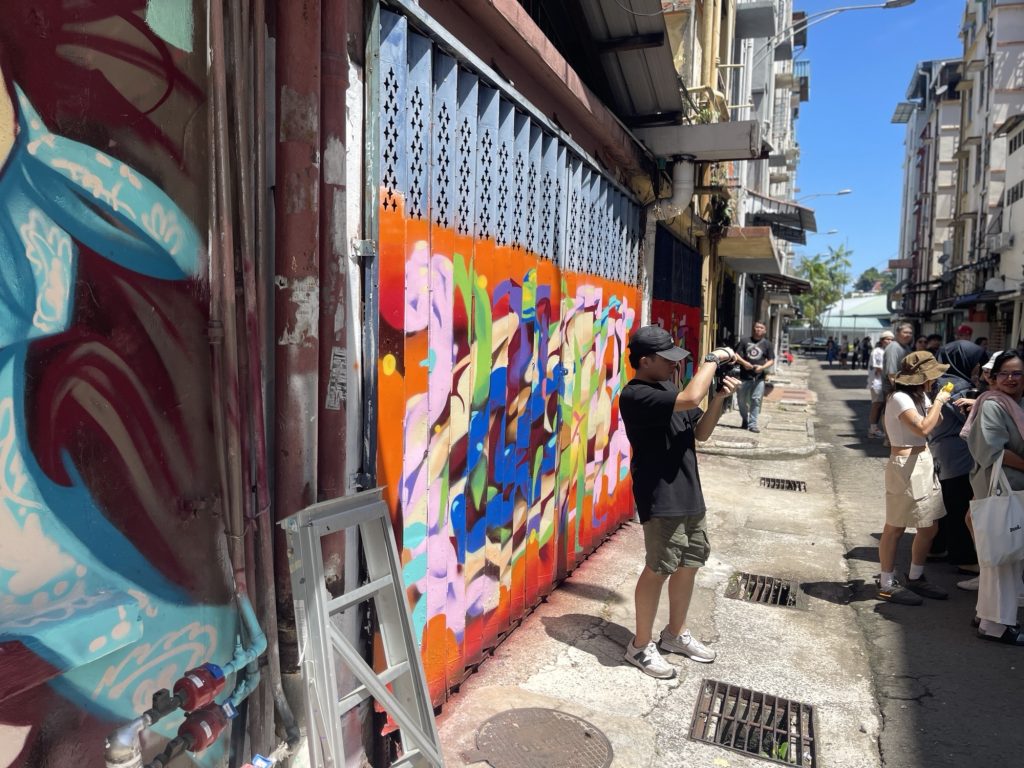
From the bustling streets of Kampung Air to the faded facades of Jalan Pantai, Sabah’s urban landscape is transforming into a giant outdoor art gallery. Towering murals inject life into grey walls, telling stories of Sabah’s culture, resilience, and spirit. They’re Instagram gold and civic pride rolled into one.
But beneath the layers of paint lies a troubling reality: local artists, often the unsung heroes of these stunning artworks, find themselves overlooked, underpaid, and overshadowed.
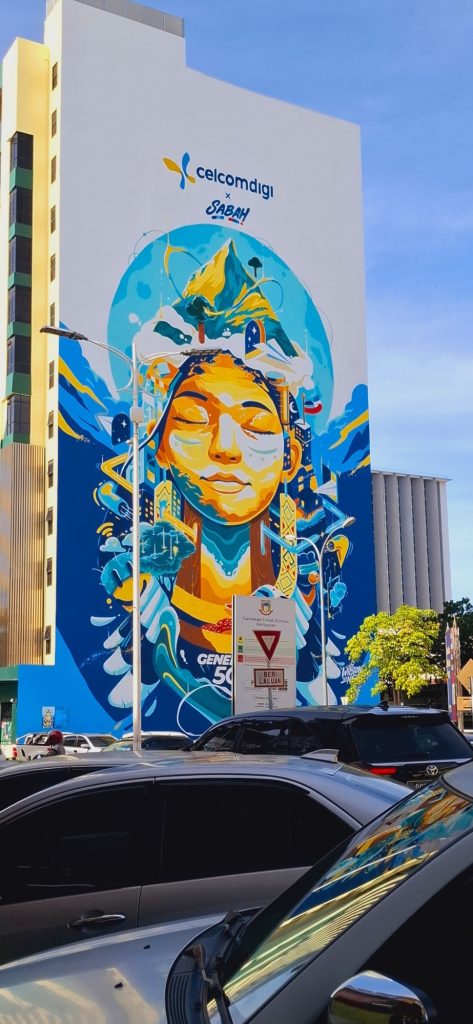
Take The Dreamer, Sabah’s largest mural. A visual masterpiece sponsored by CelcomDigi, it was brought to life by Wilson Ng, a Sabahan artist who had to make his name outside the state before being entrusted with such a project. It’s not just a mural; it’s a branding coup for the telecommunications giant.
It also reveals a pattern. Companies looking for talent often bypass Sabah’s homegrown artists, opting instead for those with higher profiles—many of whom are based in Peninsular Malaysia, including Sabahans who had to leave to get ahead.
The agents and the artists from the peninsula control everything, and we’re just seen as the backup crew.”
Outsiders calling the shots
Sabah has no shortage of skilled artists. What it lacks, however, is exposure. Local talents often find themselves hired not by companies directly, but through agents or artists from the peninsula. These intermediaries then tap Sabahan artists for “help,” leaving them with smaller fees and less recognition.
“It’s frustrating,” admitted a Sabahan artist who frequently assists on large-scale murals. “We’re as good as anyone, but because we’re based here, we don’t get the same opportunities. The agents and the artists from the peninsula control everything, and we’re just seen as the backup crew.”
This dynamic creates a glaring pay gap. Some projects fetch hundreds of thousands of ringgit—reports suggest figures as high as RM500,000. Yet local artists hired to do much of the groundwork often receive as little as RM1,500 for days of physically demanding labour.
“It’s not just about the money,” the artist continued. “It’s about the principle. We’re painting in the heat, climbing scaffolding, with no safety gear. If something happens, we’re on our own. Meanwhile, those calling the shots walk away with the big checks and the credit.”
A question of fairness
This reliance on Peninsular artists or Sabah-KL based artists, and their agents isn’t just an economic issue—it’s a cultural one. Many of the artists hired to lead these projects are originally from Sabah but had to leave the state to find success. Their return, while celebrated, underscores the systemic lack of support for those who choose to stay.
Take Red Hong Yi, now an internationally renowned artist famous for her inventive large-scale works. Born in Sabah, she built her career abroad. Similarly, Kenji, another prominent name, has garnered acclaim outside the state. Their talent is undeniable—but why couldn’t their success have been nurtured at home?
“Sabah’s artists are equally talented,” said muralist Cracko, a familiar name in Sabah’s street art scene. “But the lack of exposure and connections means we’re always second in line. The agents from the peninsula know the companies, and the companies trust them. We’re just extras in our own story.”
Murals as marketing
It doesn’t help that murals, while celebrated as public art, have become branding gold. Edgy, visually arresting, and irresistibly Instagrammable, they align brands with creativity and culture.
“Murals are a clever way for companies to appear fresh and socially engaged,” said a marketing expert. “But let’s not kid ourselves—this isn’t philanthropy. It’s a calculated move to resonate with younger audiences.”
And while brands profit from the murals’ cultural cachet, the artists who create them—especially locals—often find themselves underpaid and underprotected.
A fragile future
Sabah’s art scene is undeniably thriving, but its foundation feels precarious. Artists are calling for better representation, fairer pay, and direct engagement between companies and local talent. Safety is also a pressing concern. Murals aren’t painted from the ground, and the lack of proper equipment or insurance leaves many artists vulnerable.
“Art isn’t just decoration; it’s storytelling,” said local artist Rosmaini Sunarjo. “These murals are our way of preserving Sabah’s heritage, documenting its culture for future generations. If companies want to use our art for their branding, they should also invest in the artists creating it.”
Rosmaini also highlighted the challenges faced by those trying to make a career in Sabah. “Very few of us are full-time artists. Most juggle other jobs or only paint for competitions. And the ones who do make it big—like Red Hong Yi or Kenji—have to leave. How can we build a thriving scene when our best talents can’t stay?”
The bigger picture
Sabah’s murals are more than just beautiful walls. They’re reflections of the state’s creativity and culture. But as the murals grow in scale and impact, so too must the recognition and support for the people behind them.
The next time you snap a photo of one of these stunning artworks, spare a thought for the artist who made it happen. Their work doesn’t just colour the streets—it shapes Sabah’s cultural identity.
And that’s something worth fighting for. – January 22, 2025
